Case studies · Toxicology · An environmental toxicologist moving into human health
Detected everywhere, demonstrated [nowhere].
An environmental toxicologist is moving from ecosystems to human health. Headlines say microplastics are in our blood, brains and arteries. Before designing a study, they need to separate what has been measured from what has been shown, and find the question that would actually settle it.
Illustrative case: an anonymous researcher role, built in the real app. Every paper is a real Consensus record; readings are AI-written from abstracts.
The question
Measured is not the same as harmful
The toxicologist’s working thesis: microplastics are now reported throughout the human body, but harm at real-world exposure levels has not yet been shown. Lacunav reads every paper against that line, so detection studies, method critiques and clinical studies each take a clear stance.
“Microplastics are now reported throughout the human body, but whether they harm health at real-world exposure levels has not yet been shown.”
Home field: Environmental health · Toxicology
The map
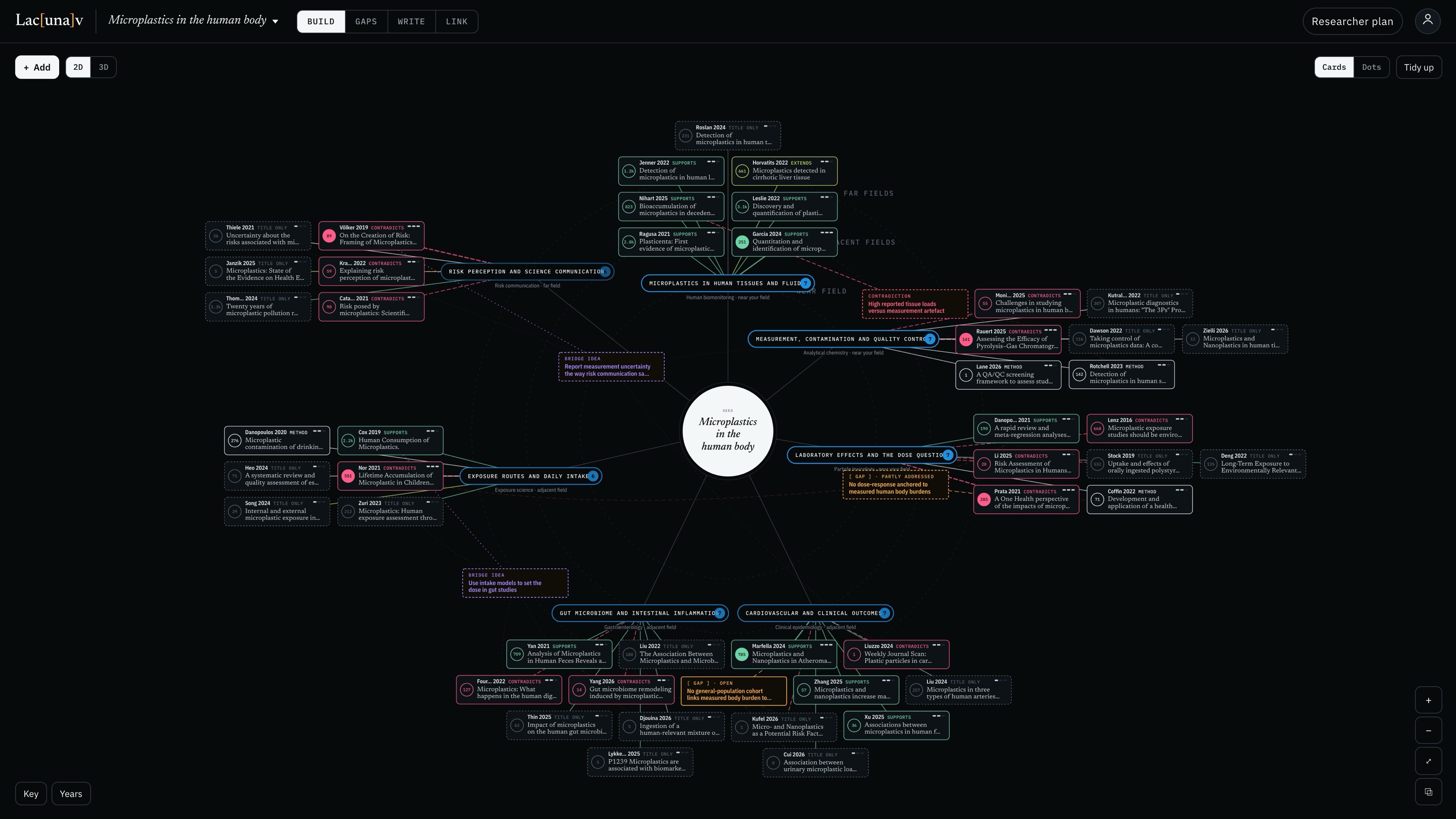
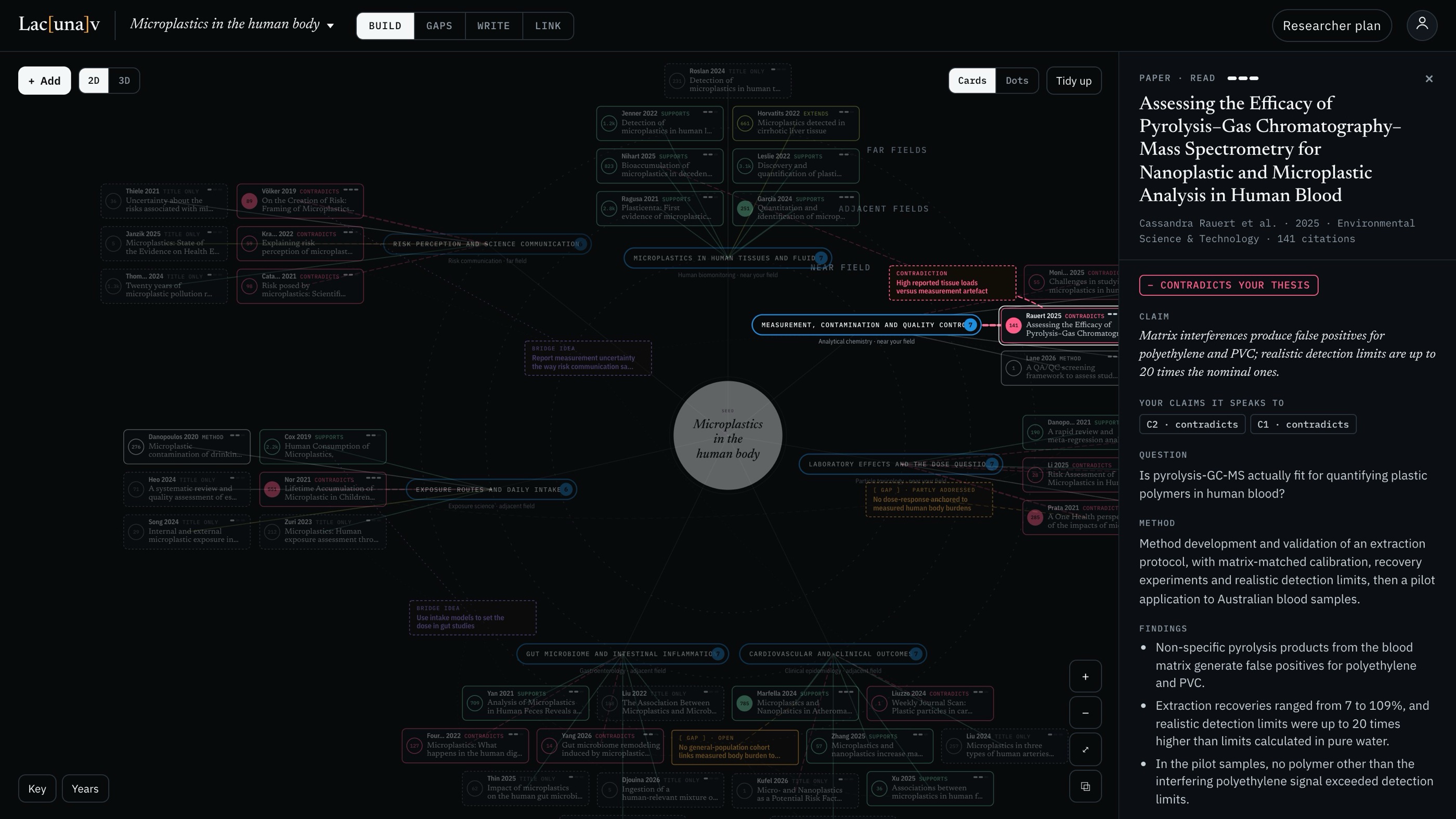
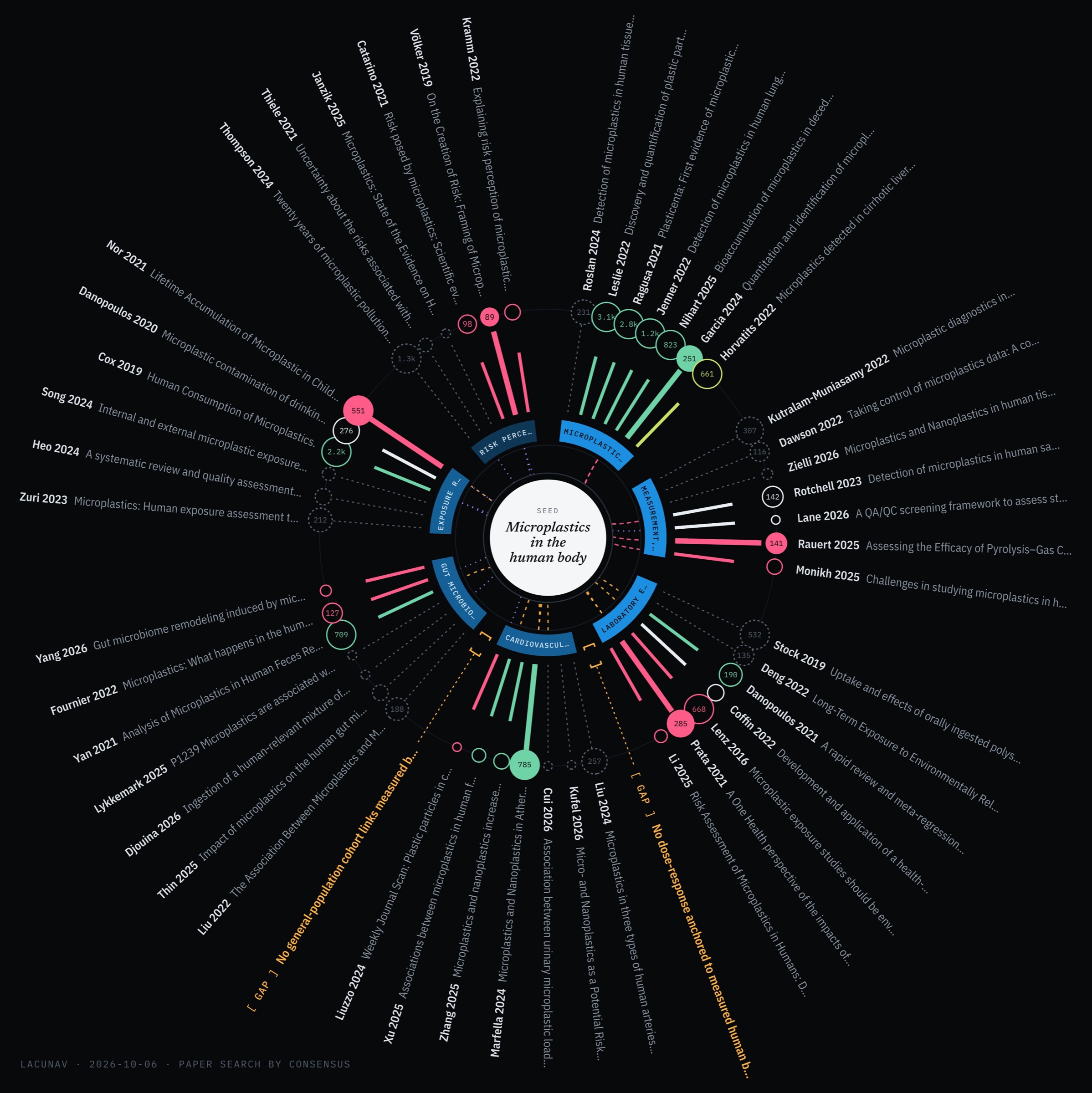
7 areas, from the home field to the far edge
The near ring holds detection, measurement quality and laboratory effects. The adjacent ring covers clinical outcomes, the gut and exposure routes. The far ring is risk perception and science communication: social science that rarely meets toxicology, and the source of a bridge about how uncertainty should be reported.
| Area | Ring | Papers | Why it’s on the map |
|---|---|---|---|
| Microplastics in human tissues and fluids | near | 7 | This is the evidence base that pulled you out of environmental samples and into human specimens — and the first thing a health audience will ask you about. |
| Measurement, contamination and quality control | near | 7 | Everything you conclude about the body rests on whether the numbers are real; this is where your environmental-sampling instincts transfer most directly. |
| Laboratory effects and the dose question | near | 7 | Your home ground: the cell and animal literature is large, but most of it was run at concentrations no person experiences. |
| Cardiovascular and clinical outcomes | adjacent | 7 | The handful of studies that attach a measured particle burden to a patient outcome — the nearest thing the field has to evidence of harm in people. |
| Gut microbiome and intestinal inflammation | adjacent | 7 | The gut is where ingested particles are most concentrated, and where human association studies and rodent models currently meet most awkwardly. |
| Exposure routes and daily intake | adjacent | 6 | Without a defensible intake estimate there is no denominator for any dose-response claim you want to make. |
| Risk perception and science communication | far | 6 | The gap between what your field can show and what the public has already concluded is itself a measurable object — and it will shape how your results are read. |
Claims × areas
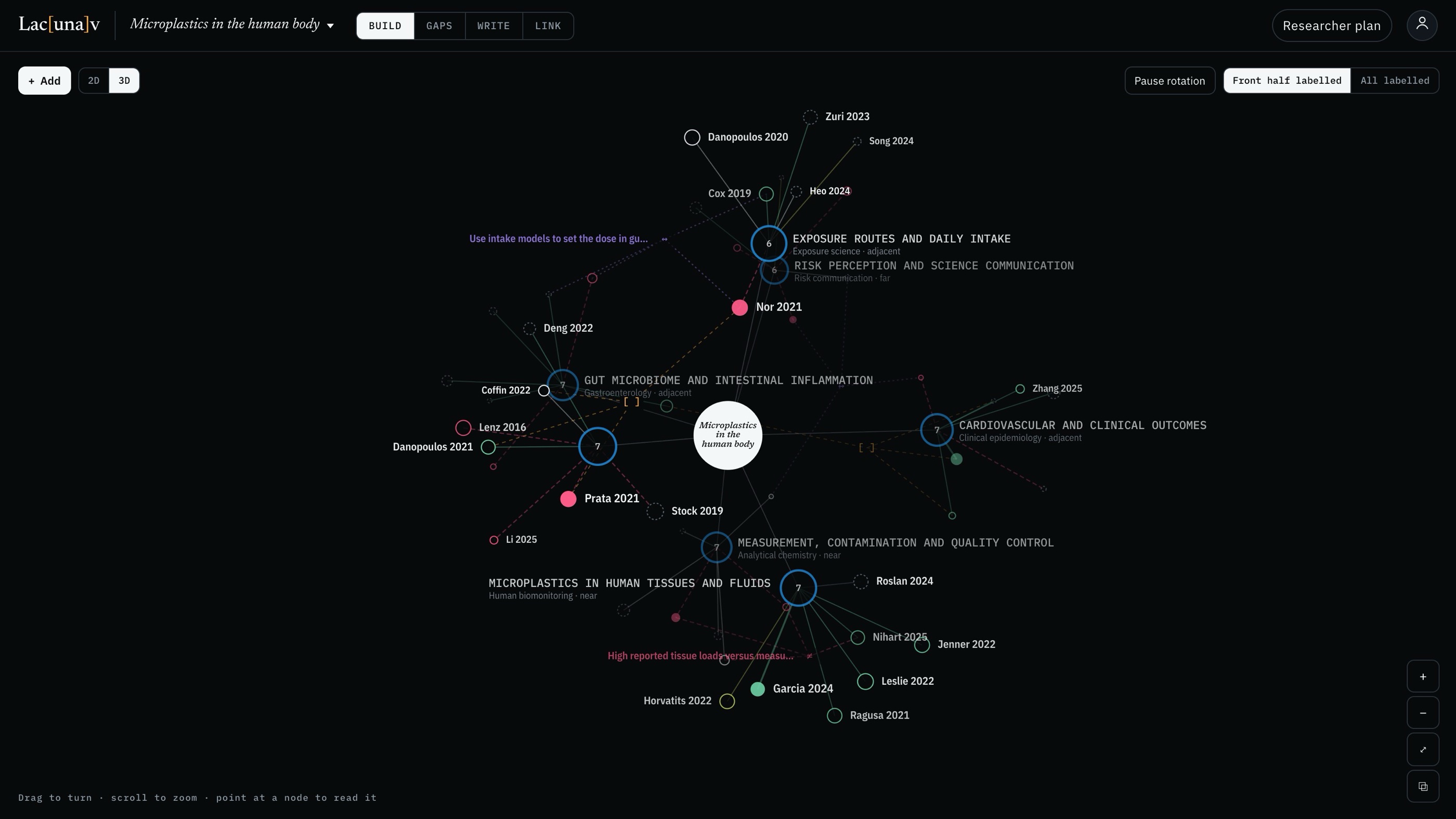
Where the thesis has evidence, and where it has none
- C1Microplastics are present in human tissues and fluids
- C2Reported concentrations survive contamination and method checks
- C3Particles harm cells and animals at realistic doses
- C4Measured body burden predicts clinical outcomes in people
- C5Everyday human intake can be quantified
- C6Public concern matches the strength of the evidence
The open gap
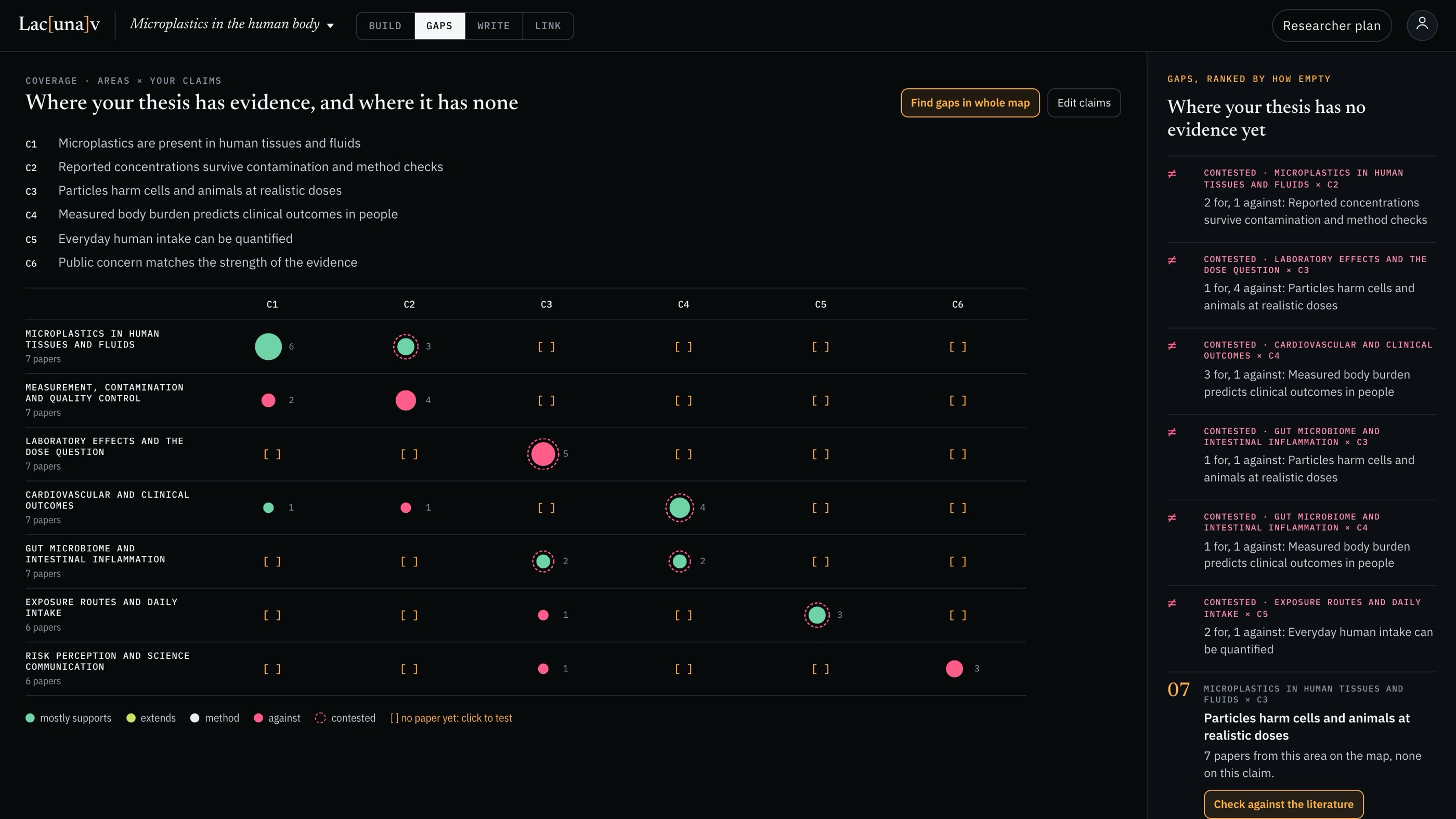
No general-population cohort links measured body burden to later disease
Every human study that reports an outcome measures particles in people already selected for disease or surgery: Marfella 2024 in endarterectomy patients, Xu 2025 in colorectal cancer cases and controls, Cui 2026 in a single cross-sectional blood draw. None measures burden in a healthy population and then follows it. Without that design, reverse causation — disease changing retention, as Yan 2021 itself allows — cannot be separated from exposure causing disease.
The closest designs found are patient cohorts sampled at surgery (Marfella 2024; Zhang 2025 in infarction patients), a case-control study of faecal load and colorectal cancer (Xu 2025), cross-sectional urinary burden against inflammatory biomarkers (Cui 2026) and county-level ecological analyses. A 2026 systematic review of microplastics and diabetes states that the absence of large prospective cohort studies precludes causal inference, and the Symeonides 2024 umbrella review found no meta-analyses evaluating microplastics at all.
Test query: prospective population cohort microplastic concentrations in blood or urine and incident disease risk
A contradiction
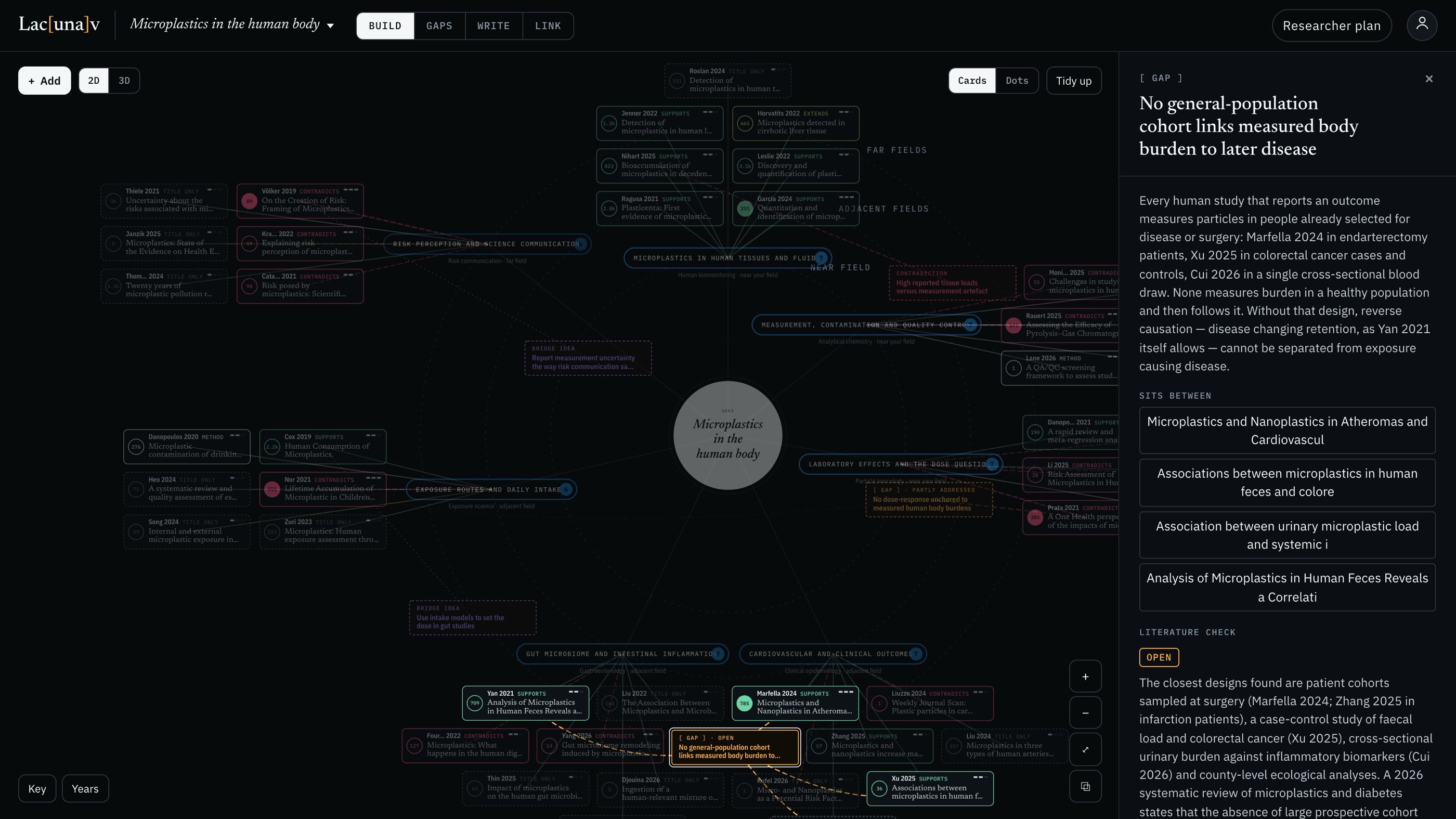
High reported tissue loads versus measurement artefact
Nihart 2025 reports brain concentrations rising over time, and Garcia 2024 reports up to 685 µg per gram of placenta; Monikh 2025 replies that the brain work lacks contamination controls and validation steps, and Rauert 2025 shows that the same analytical technique generates false positives for polyethylene and PVC in blood. Rotchell 2023 makes the problem concrete: vein tissue levels were not significantly different from the procedural blanks run alongside them.
Everything it found
5 directions for the next paper
Each finding is tied to the papers it comes from and has a query you can run again.
No general-population cohort links measured body burden to later disease
Every human study that reports an outcome measures particles in people already selected for disease or surgery: Marfella 2024 in endarterectomy patients, Xu 2025 in colorectal cancer cases and controls, Cui 2026 in a single cross-sectional blood draw. None measures burden in a healthy population and then follows it. Without that design, reverse causation — disease changing retention, as Yan 2021 itself allows — cannot be separated from exposure causing disease.
Between: Marfella et al. 2024, Xu et al. 2025, Cui et al. 2026, Yan et al. 2021
High reported tissue loads versus measurement artefact
Nihart 2025 reports brain concentrations rising over time, and Garcia 2024 reports up to 685 µg per gram of placenta; Monikh 2025 replies that the brain work lacks contamination controls and validation steps, and Rauert 2025 shows that the same analytical technique generates false positives for polyethylene and PVC in blood. Rotchell 2023 makes the problem concrete: vein tissue levels were not significantly different from the procedural blanks run alongside them.
Between: Nihart et al. 2025, Monikh et al. 2025, Rauert et al. 2025, Rotchell et al. 2023
No dose-response anchored to measured human body burdens
Prata 2021 notes that assays have been run at over 100,000 times environmental concentrations, and Li 2025 finds most cytotoxicity results non-toxic below about 40 µg/mL. Meanwhile Mohamed Nor 2021 models lifetime tissue accumulation in tens of nanograms. Nobody has taken a measured human tissue concentration and dosed an animal or an organoid to reach it.
Between: Prata et al. 2021, Coffin et al. 2022, Nor et al. 2021, Danopoulos et al. 2021
Report measurement uncertainty the way risk communication says it travels
Völker 2019 shows that uncertainty is the part of a microplastics finding that disappears on the way to the public, and Thiele 2021 finds the same uncertainty unresolved even among people who work on the topic. Lane 2026 gives the quality criteria that would let a paper state plainly how far its numbers can be trusted — and Liuzzo 2024 shows what happens to a headline result when that statement is missing.
Between: Völker et al. 2019, Thiele et al. 2021, Lane et al. 2026, Liuzzo et al. 2024
Use intake models to set the dose in gut studies
Cox 2019 and Mohamed Nor 2021 give particle counts and an internal mass per day; Djouina 2026 has already built a mixture matched to the polymers found in human stool, and Fournier 2022 has a human-donor colon model that currently runs on arbitrary polyethylene doses. Joining the exposure estimate to the gut model would give the first ingestion experiment whose dose is defensible.
Between: Cox et al. 2019, Nor et al. 2021, Djouina et al. 2026, Fournier et al. 2022
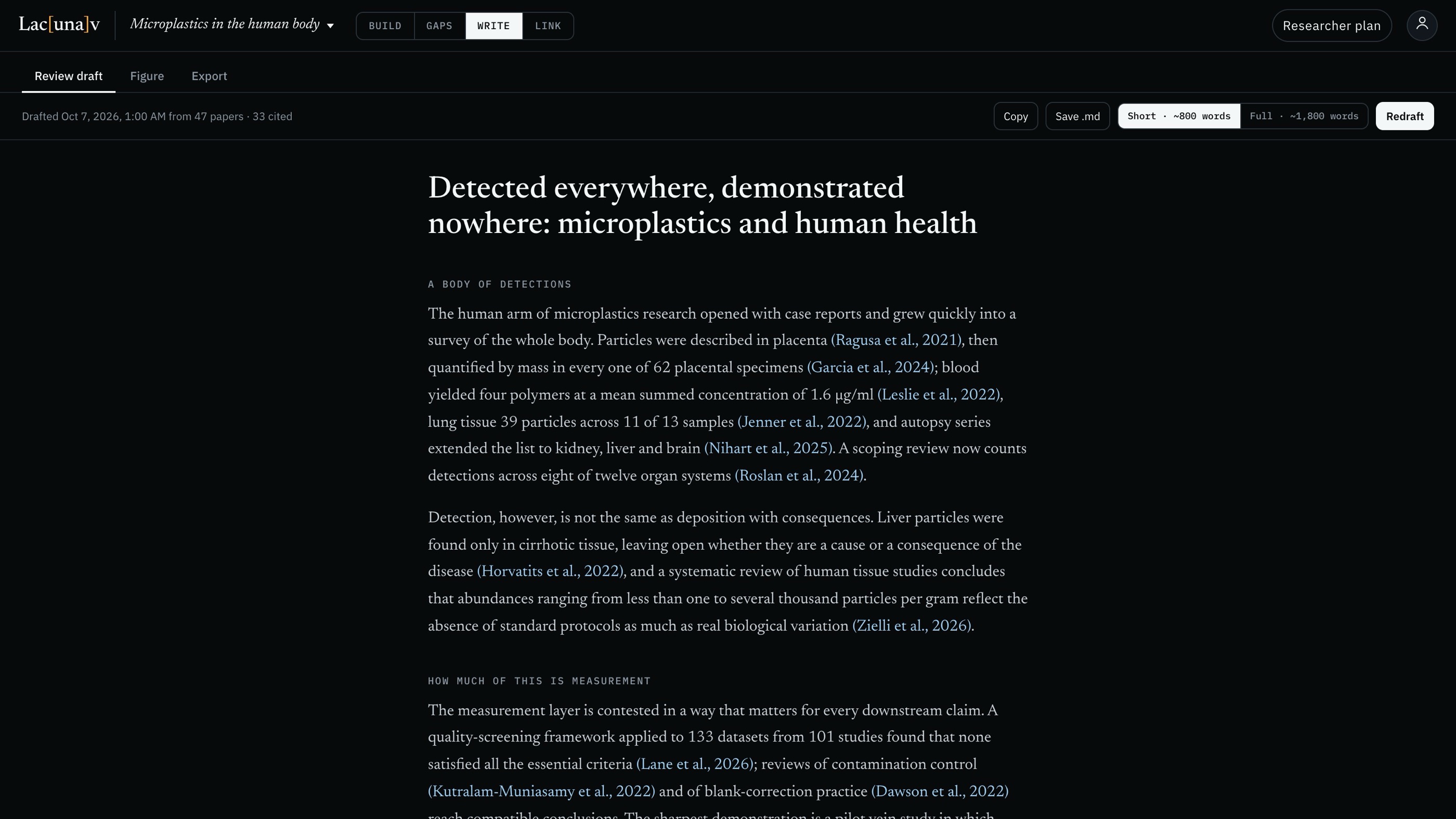
Write
A cited review and a figure, drafted from the map
Detected everywhere, demonstrated nowhere: microplastics and human health: A body of detections · How much of this is measurement · From particles to harm. Every citation is a paper on the map.
Link
Two maps: Microplastics in the human body × Plastic additives and endocrine disruption
Both maps ask what plastic does to people, but they are built on different evidence: the particle map has detections in tissue and almost no epidemiology, while the additive map has decades of biomonitoring, meta-analyses and dose-response but no particles. The chemicals travel inside the particles, so the two literatures describe one exposure measured in two incompatible ways.
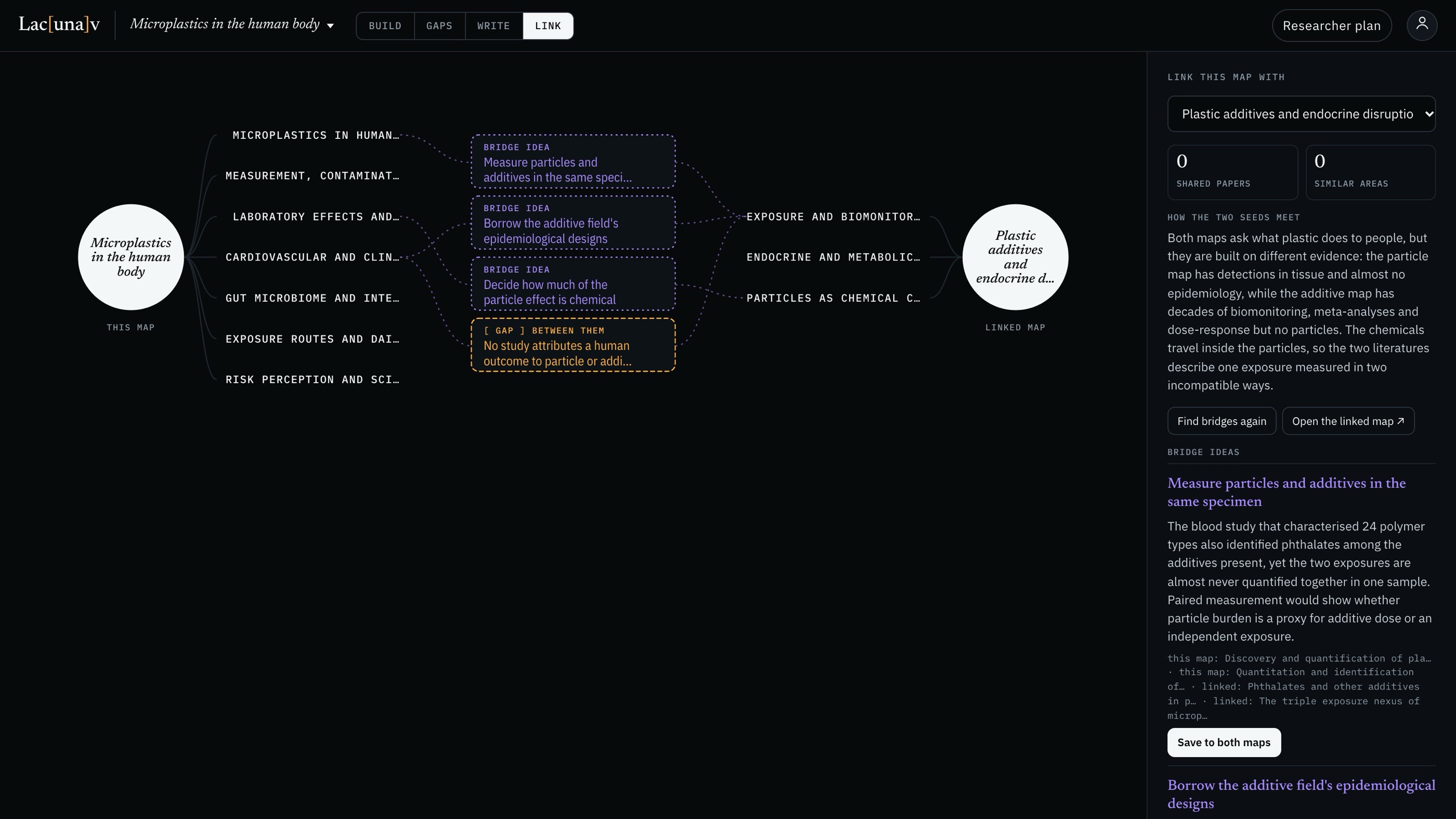
Measure particles and additives in the same specimen
The blood study that characterised 24 polymer types also identified phthalates among the additives present, yet the two exposures are almost never quantified together in one sample. Paired measurement would show whether particle burden is a proxy for additive dose or an independent exposure.
Borrow the additive field's epidemiological designs
The additive literature already supports pooled meta-analyses across birth, metabolic and reproductive outcomes, while no meta-analysis of microplastics exists. Its cohort designs and biomarker panels are the template the particle field lacks.
Decide how much of the particle effect is chemical
A food-web model finds particles matter as an additive source only above ingestion rates far higher than measured human intake, while reviews of leachate toxicity attribute a substantial share of observed effects to the chemicals rather than the particle. Settling this changes what a dose-response experiment should administer.
No study attributes a human outcome to particle or additive
Clinical findings on particle burden have no additive measurement alongside them, and additive epidemiology has no particle count; neither literature can say which exposure its association belongs to.
Key papers
The sources behind the findings
A selection of the 47 real papers on the map: the ones read in depth and the ones each finding rests on.
- Quantitation and identification of microplastics accumulation in human placental specimens using pyrolysis gas chromatography mass spectrometry.
Marcus A. Garcia et al. · 2024 · Toxicological sciences : an official journal of the Society of Toxicology · doi:10.1093/toxsci/kfae021 - Assessing the Efficacy of Pyrolysis–Gas Chromatography–Mass Spectrometry for Nanoplastic and Microplastic Analysis in Human Blood
Cassandra Rauert et al. · 2025 · Environmental Science & Technology · doi:10.1021/acs.est.4c12599 - A One Health perspective of the impacts of microplastics on animal, human and environmental health.
J. C. Prata et al. · 2021 · The Science of the total environment · doi:10.1016/j.scitotenv.2021.146094 - Microplastics and Nanoplastics in Atheromas and Cardiovascular Events
R. Marfella et al. · 2024 · The New England journal of medicine · doi:10.1056/nejmoa2309822 - Lifetime Accumulation of Microplastic in Children and Adults
N. H. Mohamed Nor et al. · 2021 · Environmental Science & Technology · doi:10.1021/acs.est.0c07384 - On the Creation of Risk: Framing of Microplastics Risks in Science and Media
Carolin Völker et al. · 2019 · Global Challenges · doi:10.1002/gch2.201900010 - Associations between microplastics in human feces and colorectal cancer risk.
Jingyan Xu et al. · 2025 · Journal of hazardous materials · doi:10.1016/j.jhazmat.2025.139099 - Association between urinary microplastic load and systemic inflammation and oxidative stress markers in adults.
Xiao Cui et al. · 2026 · Ecotoxicology and environmental safety · doi:10.1016/j.ecoenv.2026.120541 - Analysis of Microplastics in Human Feces Reveals a Correlation between Fecal Microplastics and Inflammatory Bowel Disease Status.
Ze-Hua Yan et al. · 2021 · Environmental science & technology · doi:10.1021/acs.est.1c03924 - Bioaccumulation of microplastics in decedent human brains
A. Nihart et al. · 2025 · Nature Medicine · doi:10.1038/s41591-024-03453-1 - Challenges in studying microplastics in human brain
F. A. Monikh et al. · 2025 · Nature Medicine · doi:10.1038/s41591-025-04045-3 - Detection of microplastics in human saphenous vein tissue using μFTIR: A pilot study
J. Rotchell et al. · 2023 · PLOS One · doi:10.1371/journal.pone.0280594 - Development and application of a health-based framework for informing regulatory action in relation to exposure of microplastic particles in California drinking water
Scott Coffin et al. · 2022 · Microplastics and Nanoplastics · doi:10.1186/s43591-022-00030-6 - A rapid review and meta-regression analyses of the toxicological impacts of microplastic exposure in human cells.
Evangelos Danopoulos et al. · 2021 · Journal of hazardous materials · doi:10.1016/j.jhazmat.2021.127861
What to trust, and what to check
Strong leads, not verdicts
Real sources
Every paper is a real Consensus record with its link and DOI. Nothing was invented to fill a gap.
AI reading, your judgement
Skims and deep reads use abstracts, not full texts. “Open” means the check found no close study: a lead to verify.
How this case was made
The map was built from thirteen Consensus searches. The toxicologist is an illustrative role, not a real researcher.
Your turn
What’s [missing] in your field?
Write one sentence about your argument and let the map grow from there.