Use cases
One tool across the research [cycle].
Finding a question, entering a new field, proving a proposal is new, starting a student well. Each starts with the same thing: knowing what the literature has covered and what it hasn’t.
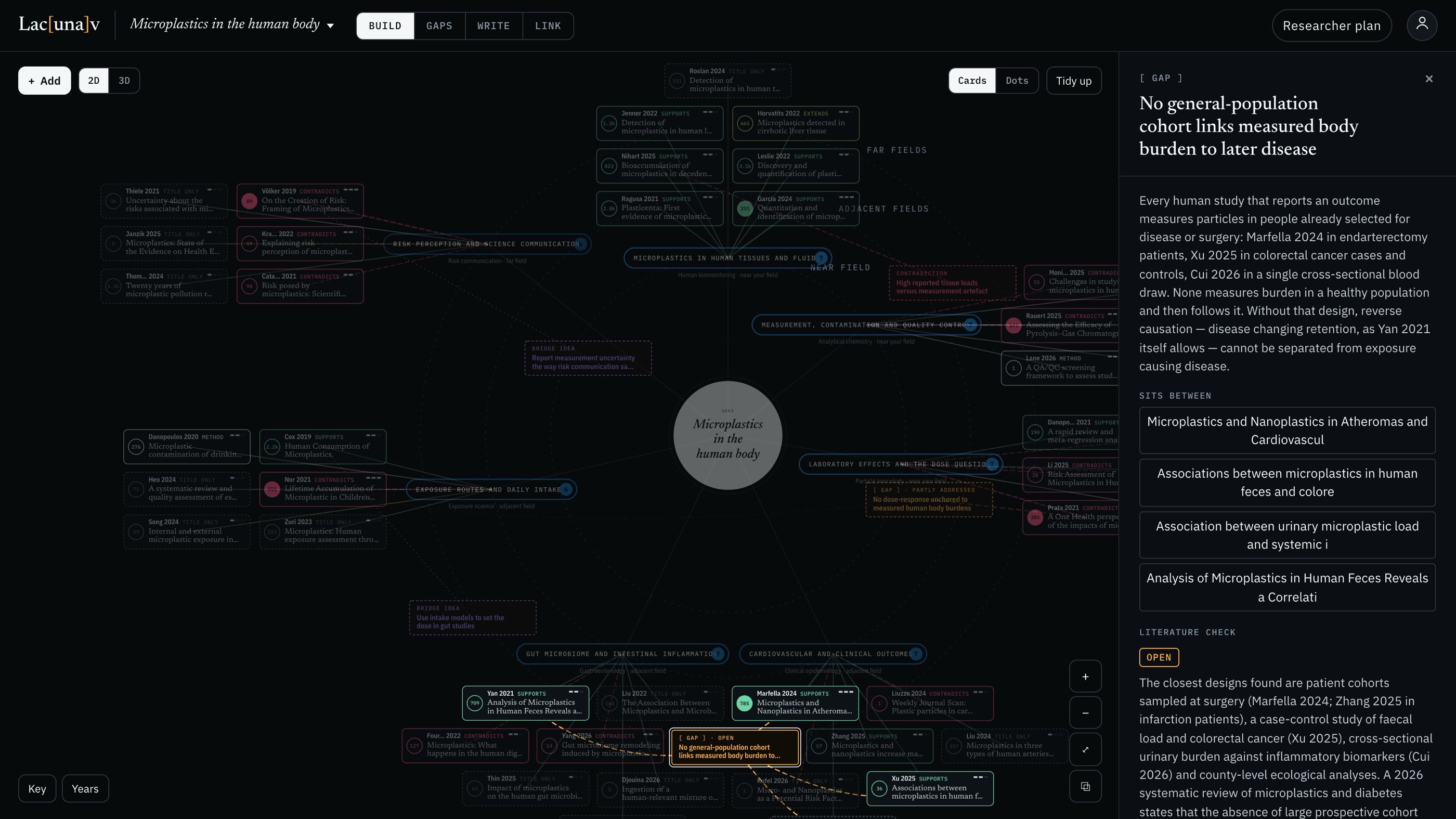
- Open gaps, each checked against the literature
- Contradictions worth a debate paper
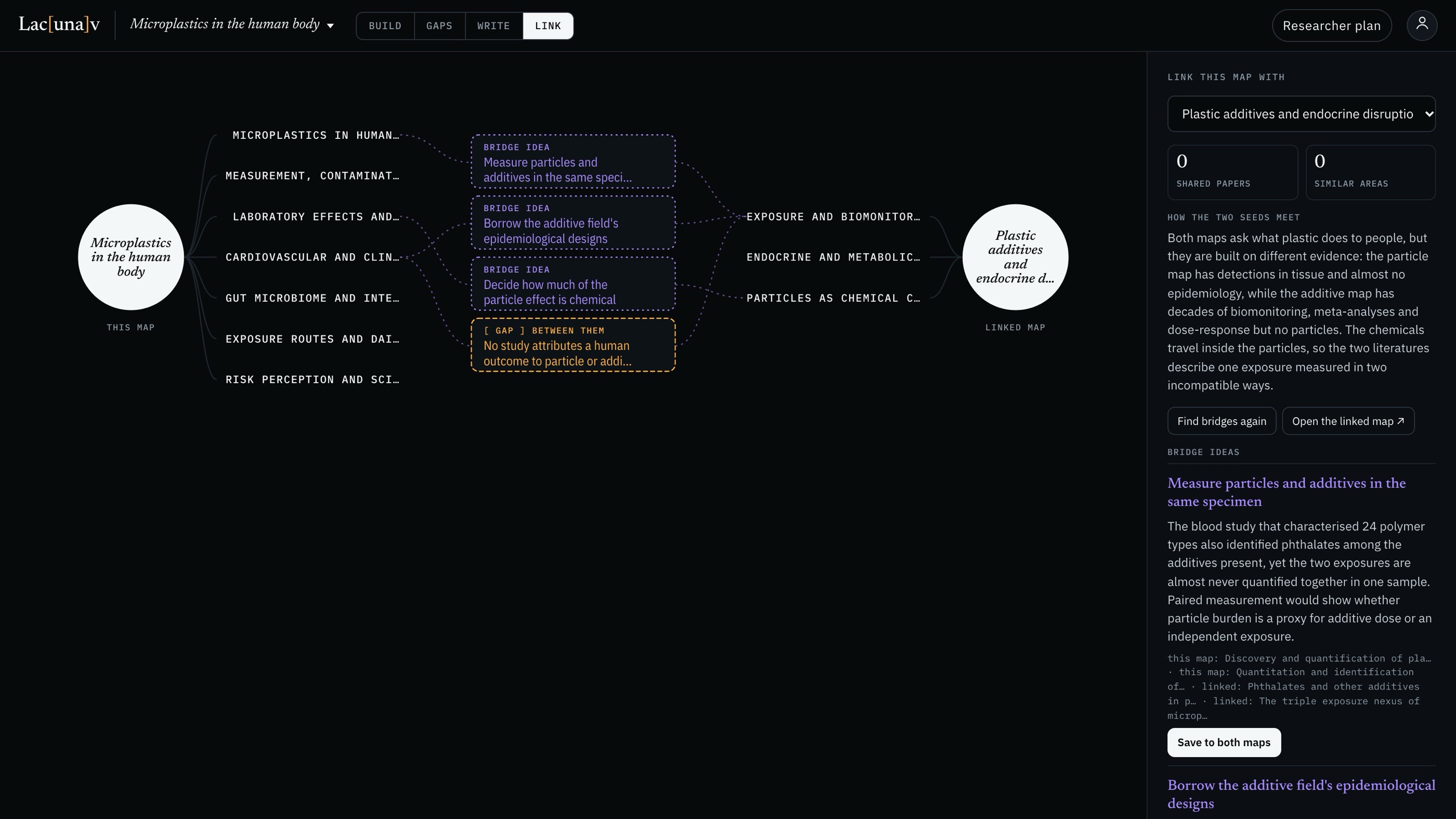
- Bridges between your research lines
- A new field mapped in minutes
- Skim many papers, read deeply only the ones that matter
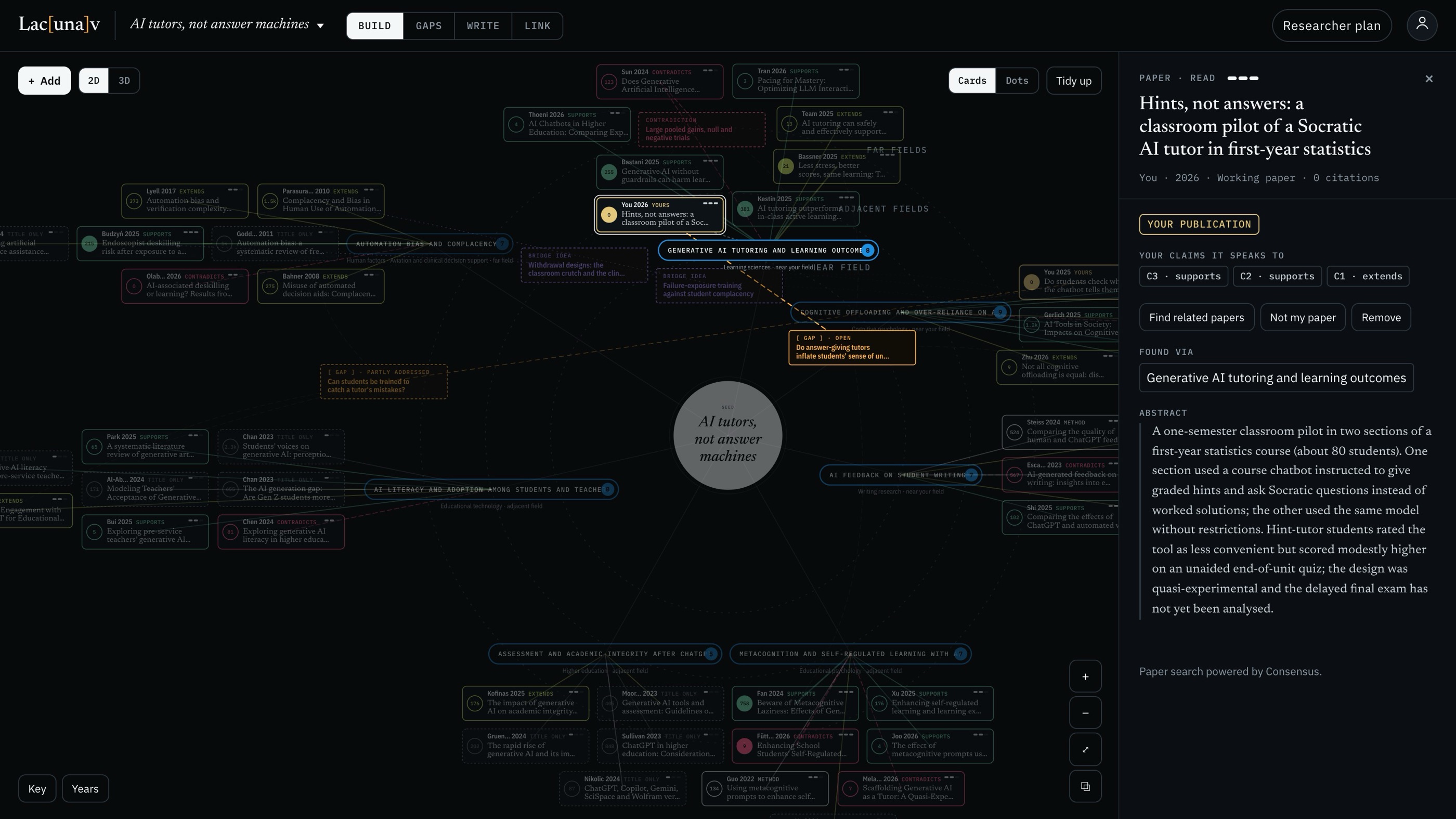
- Your own work as the anchor
- A cited review draft
- State of the art and the gap, for proposals
- Orbit figures for papers and talks
- Start a student’s thesis with a map
- Import and export DOI, BibTeX, RIS, Zotero
- Every map backed up to a file you keep
PhD & master’s students
Find a thesis question you can defend as new
The first year of a doctorate often goes to reading a field from the centre outwards, only to find the obvious questions taken. Lacunav starts from the edges.
- 01Write your rough idea as a seed. It doesn’t need to be polished.
- 02Let the map show near, adjacent and far areas, with real papers in each.
- 03Skim everything, deep-read the ten papers that matter.
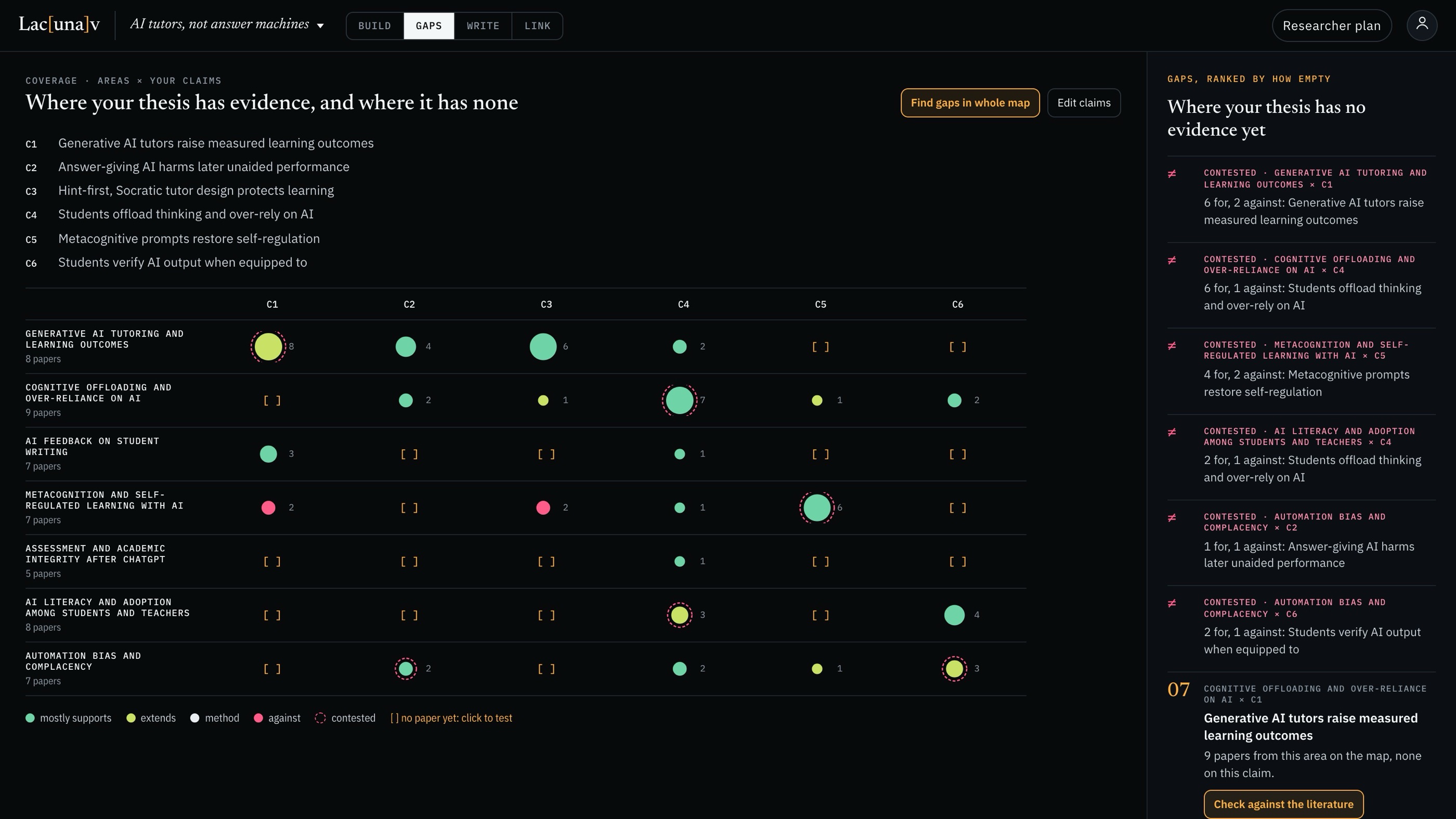
- 04Use Gaps mode to see which of your claims have no evidence yet, and check the best one.
You leave with a reading list, a short review draft, and a gap with the search that shows it is open, ready to bring to your supervisor.
Researchers
Your next article, between the fields you know
Established researchers rarely lack ideas. They lack the hours to check whether an idea at the edge of their field is really open. Add your publications, and Lacunav reads the field against them.
Bridges that start from your own papers are natural next articles. Contradictions between other people’s studies can become debate papers. And when you move into a new field, the map gets you oriented in an afternoon instead of a semester.
Grant writers
State of the art, and proof the question is new
Reviewers ask two things: do you know the field, and has this been done? Lacunav gives you a cited state of the art drawn from real papers, and a gap check that lists the closest existing studies.
Bring the review draft, the Orbit figure and the check’s test query into your proposal. Reviewers can run the same search themselves.
Supervisors & teaching
Start every student with a map of their field
Build a map with a new student in the first meeting: their seed, their areas, the papers that matter. Download it as a file and share it. They open it as a map of their own and keep growing it.
In a seminar, the claims grid makes literature reviewing visible: students see why a gap is a gap, and how to test it.
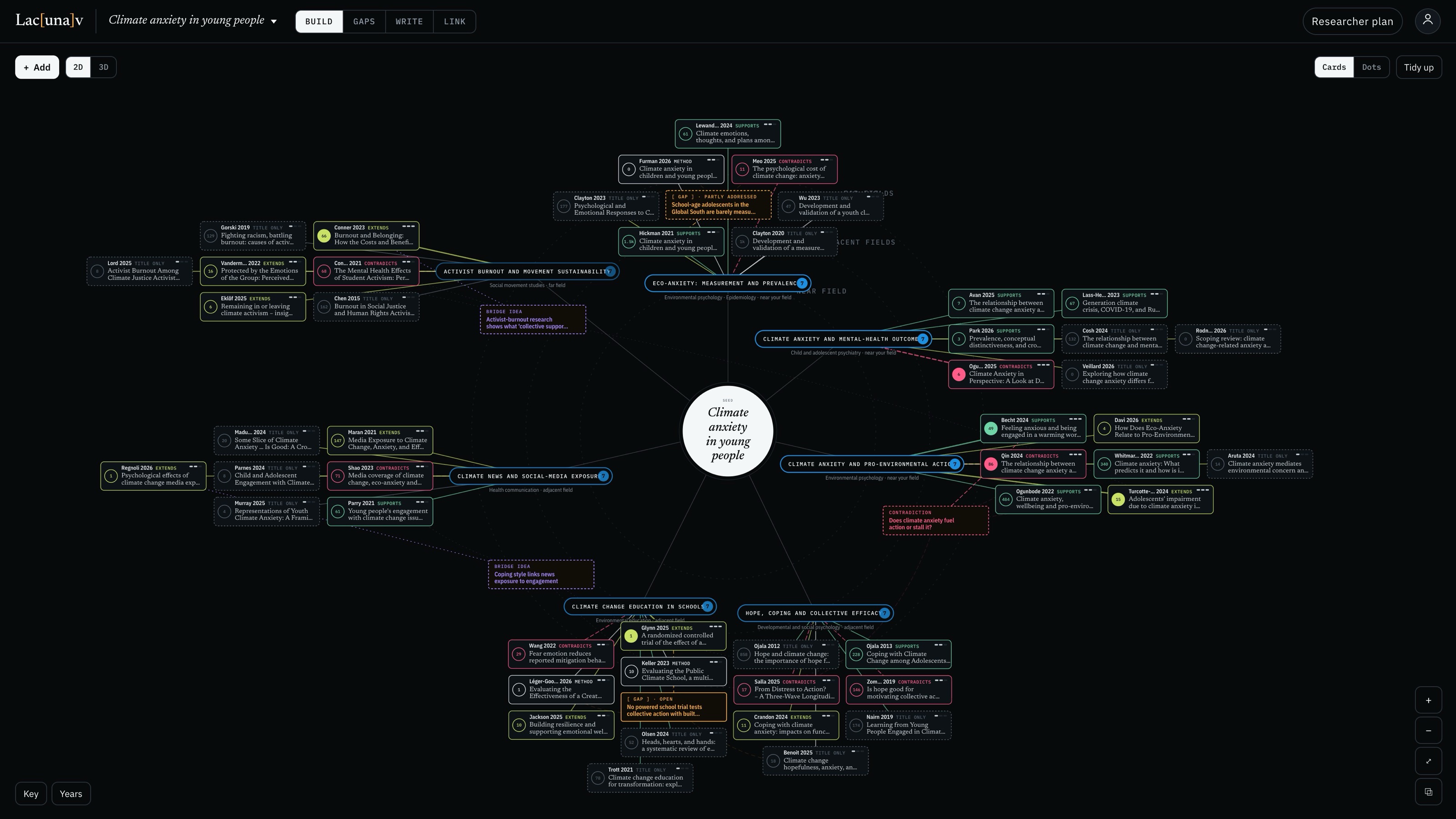
Interdisciplinary & design research
When your work lives between departments
Design, architecture, health and the environmental sciences cross journal boundaries all the time, and no single database search covers the crossing. Far-field areas and Link mode are built for this: two research lines side by side, shared papers counted, bridges named.